Most of you know the feeling. You’ve been working hard, spending day in and day out working on this project. You’ve made outlines, characters, and written scene after scene. Then finally you write those magical two words. The End.
Or perhaps you haven’t finished yet. You’re still working on those scenes and trying your best to describe how a character walks across the room.
Either way, at some point you might have gotten to the point where you hate your first draft. You look at the story and you just hate what you see. You wonder how anyone could ever like a story like the one you’re writing. Then you begin to compare yourself to other authors and writers, saying their writing is so much better and if you could just write like them you could have a good book readers would love.
I was in this position a while ago. I’ve been writing a first draft and it just seems like I’m making a mess of things while writing it. It felt like I had all the pieces to a puzzle yet couldn’t fit them in anywhere.
Then I realized why it felt that way.
I am gathering the supplies.
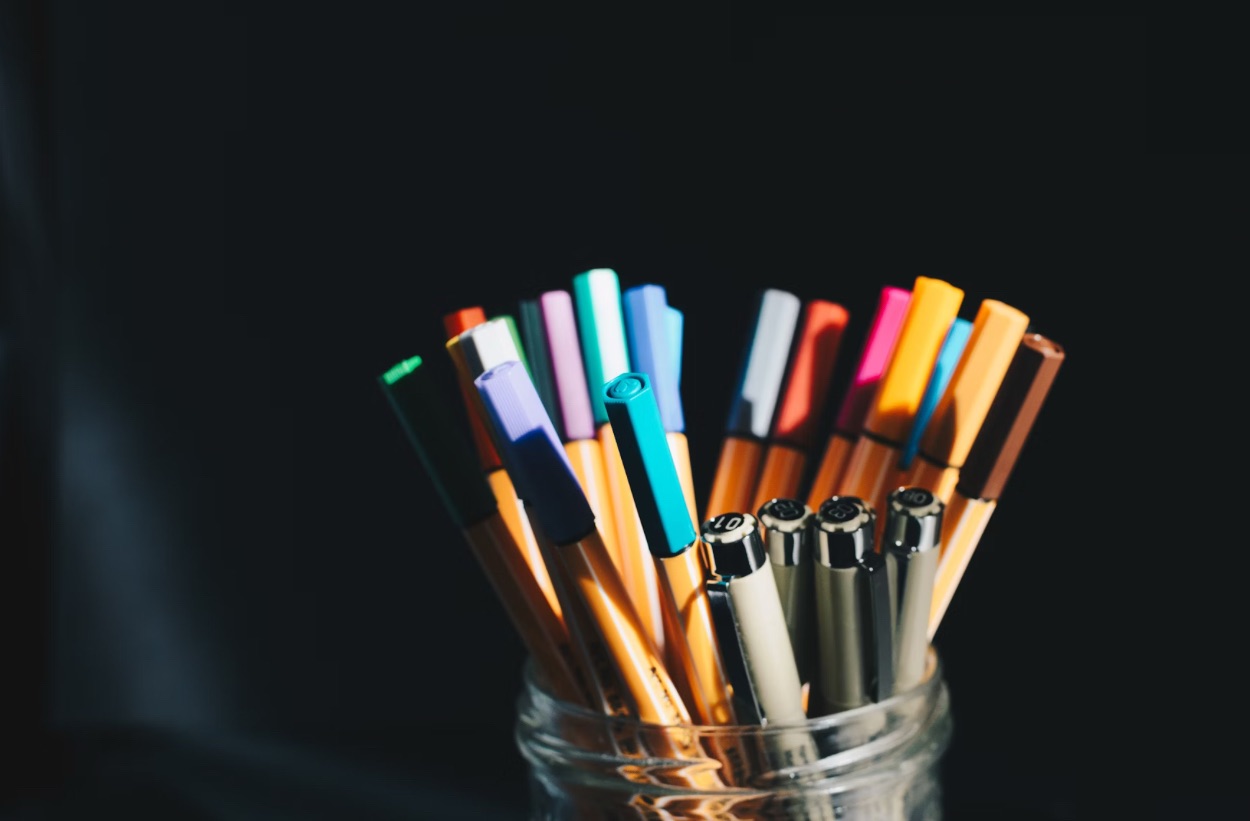
What do I mean by that? Well, think about any other creative activity. Drawing for example. When you draw a picture you need supplies. So, you have to walk through your room getting your sketchbook, then you need a pencil, then you decide you may want to color it so you grab some paints, markers, or colored pencils. Then you take all those supplies to your desk.
In any creative activity, this is the first step. You couldn’t make a piece of art if you didn’t have any paper to draw on or nothing to draw with. Why should it be different from writing? Writing is also an art.
When you write, you also need to gather your supplies. I don’t mean your outlining notebook or your laptop or headphones. I’m talking about your first draft.
The reason your first draft may seem messy is because it is. You’re not going to write the next bestselling book in the first draft. The first draft is simply for gathering the supplies. Of course, it takes longer than just grabbing a pencil, but anything worthwhile takes some time.
Your first draft is simply the base.
Your first draft won’t be the next masterpiece. It will be messy. It will probably be a little cringy. But that’s okay. It’s only the base of your story. You’re gathering the pieces that will help you write the story better.
You’re setting the stage, scribbling out some characters and creating a setting. Frankly, that’s all you need to have in a first draft.
It’s not something you need to worry about. It’s only the base of your story. Something you can rearrange and change later on.
Not comparing is the key.
Often, when you are frustrated with our first draft, it’s because you’re comparing your first draft to other writers and authors. You look at the books stacked on our bookshelf and think that you could never be like the others. You’re just not good enough. They’re so much better.
Why are they better? Because they stuck through the first draft. They didn’t start with that finished book you see. They probably started with a first draft that they hated. But they kept rewriting and rewriting and editing and changing until they came up with the book you see.
Well, what about other writers? You might see some other writers whose first drafts look a whole lot better than yours.
Why is that?
Well for one, they might be further along in their writing journey. They probably have more experience. And if that’s not the case, I can almost promise you that the reason you think that is because you’re the one writing your first draft. I bet others would think it’s pretty good.
The best thing to do when you’re working on a first draft is not to compare yourself to others. It will only do harm. Don’t compare to others. You can look at others’ works that you value and learn what you can to implement in your book. Useful things such as the way the author writes dialogue or character arcs may be good to pay attention to, but it’s not good to compare your first draft to someone else’s final draft.
So pause, look at your first draft. Think of it as gathering supplies to work with later. Gather up your characters and your setting. Get a rough look at the scenes you wrote. Refining will come later. It doesn’t matter how messy it is now.
Most of all, just keep writing. Who knows? You might like it better after a while of working at it.
Until next time,
Aliya Gerow
 Aliya Gerow
Very interesting!!!
LikeLike